

Pesticides are chemicals widely used in agricultural production to increase yield and protect crop quality. However, pesticide residues create significant concerns for food safety. In this context, various decontamination methods have been developed, and ozonation has emerged as an effective method in recent years.
Ozone and Its Properties
Ozone (O₃) is a gas composed of three oxygen atoms with strong oxidizing properties. Due to this property, it has the capacity to break down organic compounds such as microorganisms, mycotoxins, and pesticide residues. Ref.1. ("Effects of ozone treatment on pesticide residues in food", International Journal of Food Science and Technology 2019, 54, 301–312). Ozone occurs naturally in the atmosphere and can be artificially produced using ozone generators.
Chemical Properties of Ozone
Ozone is an unstable gas under normal temperature and pressure conditions and tends to rapidly convert to oxygen. With a half-life of approximately 20-30 minutes at room temperature, ozone exhibits a stronger oxidative effect when dissolved in water by forming hydroxyl radicals (OH⁻). Ref.2. (Removal of pesticide residues in food using ozone, Chemistry Advances 3 (2023) 100512). This property plays an important role in the breakdown of pesticide residues.
Pesticide Removal Mechanisms with Ozonation
The mechanism by which ozone removes pesticides is primarily based on direct and indirect oxidation reactions:
- Direct Oxidation
In the direct oxidation process, molecular ozone (O₃) directly reacts with pesticide molecules. This reaction occurs on double bonds or electron-rich functional groups in the structure of pesticide molecules. Ref.1. ("Effects of ozone treatment on pesticide residues in food", International Journal of Food Science and Technology 2019, 54, 301–312). As a result, pesticide molecules are broken down into smaller and generally less toxic compounds.
- Indirect Oxidation
In the indirect oxidation process, ozone forms hydroxyl radicals (OH⁻) in aqueous media. These radicals are stronger oxidizers than ozone and rapidly react with pesticide molecules to break them down. Ref.2 ("Removal of pesticide residues in food using ozone", Chemistry Advances 3 (2023) 100512). Hydroxyl radicals have the capacity to react with almost all organic compounds.
Ozonation Applications and Effectiveness
Ozonation technology can be applied in various forms in the food industry:
- Gaseous Ozonation
- Gaseous ozonation is effectively used especially for dry foods such as grains, legumes, and nuts. Studies have shown that gaseous ozonation significantly reduces aflatoxin and pesticide residues in peanuts. Ref.3 ("Effect of ozone on aflatoxins detoxification and nutritional quality of peanuts", Detoxification of aflatoxins in peanut kernel by dynamic continuous-flow ozonation: Synergistic effect of ozone combined with temperature on reaction mechanisms and detoxification. Cheng Chen, Ran Chen, Fei Ma, Qi Zhang, Peiwu Li, Wen Zhang, Xiaoxia Ding, Min Li, Yanru Wang, Baocheng Xu. Food Chemistry, Volume 338, 1 February 2021, 127954. )
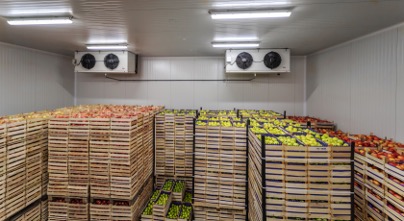
In this method, ozone gas is directly contacted with food products and applied at specific durations and concentrations.
- Ozonated Water Applications
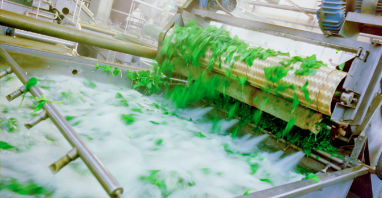
Ozonlu su, özellikle meyve ve sebzelerin yüzeyindeki pestisit kalıntılarının giderilmesinde etkili bir yöntemdir. Yapılan araştırmalar, ozonlu su ile yıkama işleminin, elma, üzüm ve domates gibi ürünlerde pestisit kalıntılarını %30-100 oranında azaltabildiğini göstermiştir. Ek.1 (Effects of ozone treatment on pesticide residues in food, International Journal of Food Science and Technology 2019, 54, 301–312).
Effectiveness of Ozonation According to Pesticide Types
The effectiveness of ozonation varies according to the type of pesticide targeted:
- Organochlorine Pesticides
Organochlorine pesticides (DDT, Aldrin, Dieldrin, etc.) are highly resistant compounds. However, studies have shown that high concentration and long-duration ozone applications can be effective in breaking down these pesticides. Ref.2. (Removal of pesticide residues in food using ozone, Chemistry Advances 3 (2023) 100512).
- Organophosphate Pesticides
Organofosfatlı pestisitler (Malathion, Parathion, Chlorpyrifos vb.), ozon uygulamalarına karşı daha duyarlıdır. Araştırmalar, bu tür pestisitlerin ozonlama ile %60-95 oranında giderilebildiğini belirtmektedir. Ek1. (Effects of ozone treatment on pesticide residues in food, International Journal of Food Science and Technology 2019, 54, 301–312).
- Pyrethroid Pesticides
Pyrethroid pesticides (Cypermethrin, Deltamethrin, etc.) readily react with ozone due to the double bonds in their molecular structure. Studies show that even short-term ozone applications can significantly reduce these types of pesticides. Ref.4 ("Pesticide Removal from Foods" Engineering Sciences Research and Application Section III With Ozone Applications, Ayşe Kurt (Lecturer Dr.) Bursa Uludağ University, Science and Technology Application and Research Center, BİTUAM)
Effects of Ozonation on Food Quality
While ozonation is effective in removing pesticides, it can also have effects on the nutritional value and sensory properties of foods:
- Effects on Nutritional Value
Studies have shown that ozonation applied under controlled conditions does not have a significant effect on the protein, carbohydrate, and mineral content of foods. However, some vitamin contents (especially vitamin C) may be adversely affected by high concentration ozone applications Ref.3 ("Effect of ozone on aflatoxins detoxification and nutritional quality of peanuts", Detoxification of aflatoxins in peanut kernel by dynamic continuous-flow ozonation: Synergistic effect of ozone combined with temperature on reaction mechanisms and detoxification. Cheng Chen, Ran Chen, Fei Ma, Qi Zhang, Peiwu Li, Wen Zhang, Xiaoxia Ding, Min Li, Yanru Wang, Baocheng Xu. Food Chemistry, Volume 338, 1 February 2021, 127954. )
- Effects on Sensory Properties
The effects of ozonation on sensory properties of foods such as color, taste, and odor vary depending on application conditions and food type. Ozonation applied under optimal conditions generally does not cause significant changes in these properties. Ref.1.(Effects of ozone treatment on pesticide residues in food, International Journal of Food Science and Technology 2019, 54, 301–312).
Advantages and Disadvantages of Ozonation
Advantages
- No residue: Ozone leaves no chemical residue in foods as it quickly converts to oxygen. Ref.2. ("Removal of pesticide residues in food using ozone", Chemistry Advances 3 (2023) 100512).
- Environmentally friendly: Ozonation is a technology that does not produce environmentally harmful waste. Ref.4 ("Pesticide Removal from Foods" Engineering Sciences Research and Application Section III With Ozone Applications, Ayşe Kurt (Lecturer Dr.) Bursa Uludağ University, Science and Technology Application and Research Center, BİTUAM)
- Broad-spectrum effect: Ozone can remove many different types of pesticides simultaneously. Ref.1 ("Effects of ozone treatment on pesticide residues in food", International Journal of Food Science and Technology 2019, 54, 301–312).
Antimicrobial effect: In addition to removing pesticides, ozone also inactivates microorganisms, contributing to food safety. Ref.3 ("Effect of ozone on aflatoxins detoxification and nutritional quality of peanuts", Detoxification of aflatoxins in peanut kernel by dynamic continuous-flow ozonation: Synergistic effect of ozone combined with temperature on reaction mechanisms and detoxification. Cheng Chen, Ran Chen, Fei Ma, Qi Zhang, Peiwu Li, Wen Zhang, Xiaoxia Ding, Min Li, Yanru Wang, Baocheng Xu. Food Chemistry, Volume 338, 1 February 2021, 127954. )
Disadvantages
- Corrosive effect: Ozone can have a corrosive effect on metal equipment. Ref.2 ("Removal of pesticide residues in food using ozone", Chemistry Advances 3 (2023) 100512).
- Control difficulty: Due to the unstable nature of ozone, controlling the application process can be difficult Ref.1. ("Effects of ozone treatment on pesticide residues in food", International Journal of Food Science and Technology 2019, 54, 301–312).
- Health risks: High concentration ozone can pose risks to human health and requires appropriate safety measures. Ref.4 ("Pesticide Removal from Foods" Engineering Sciences Research and Application Section III With Ozone Applications, Ayşe Kurt (Lecturer Dr.) Bursa Uludağ University, Science and Technology Application and Research Center, BİTUAM)
Conclusion and Recommendations
Ozonation stands out as an effective, environmentally friendly, and economical method for removing pesticide residues. This technology, which shows varying effectiveness depending on pesticide type, food matrix, and application conditions, can play an important role in increasing food safety.
Future research should focus on optimizing pesticide removal efficiency of ozonation in different food matrices, evaluating the long-term effects of ozonation on food quality, and increasing the industrial-scale applicability of ozonation technology.
References
- Ref.1 ("Effects of ozone treatment on pesticide residues in food", International Journal of Food Science and Technology 2019, 54, 301–312)
- Ref.2 ("Removal of pesticide residues in food using ozone", Chemistry Advances 3, 2023 100512)
- Ref.3 ("Effect of ozone on aflatoxins detoxification and nutritional quality of peanuts", Detoxification of aflatoxins in peanut kernel by dynamic continuous-flow ozonation: Synergistic effect of ozone combined with temperature on reaction mechanisms and detoxification. Cheng Chen, Ran Chen, Fei Ma, Qi Zhang, Peiwu Li, Wen Zhang, Xiaoxia Ding, Min Li, Yanru Wang, Baocheng Xu. Food Chemistry, Volume 338, 1 February 2021, 127954. )
- Ref.4 ("Pesticide Removal from Foods" Engineering Sciences Research and Application Section III With Ozone Applications, Ayşe Kurt (Lecturer Dr.) Bursa Uludağ University, Science and Technology Application and Research Center, BİTUAM)
Food Engineer - Project Development and Sales Support Specialist
 EN
EN  TR_TR
TR_TR